The man who chased light
What Monet spent his life trying to capture was not objects, but the fleeting light passing over them
3 chaptersAbout 5 min read
He painted the same cathedral more than thirty times, and gazed at the same pond for thirty years. The subject always stood in the same place, but what he was trying to capture was never the subject itself. The morning mist, the reflected light of noon, the color spreading over the water at dusk. To Monet, the world was not form but a state of light endlessly flowing over it. So when we stand before his paintings, what we face is not a place, but a moment in time.
Light before it had a name
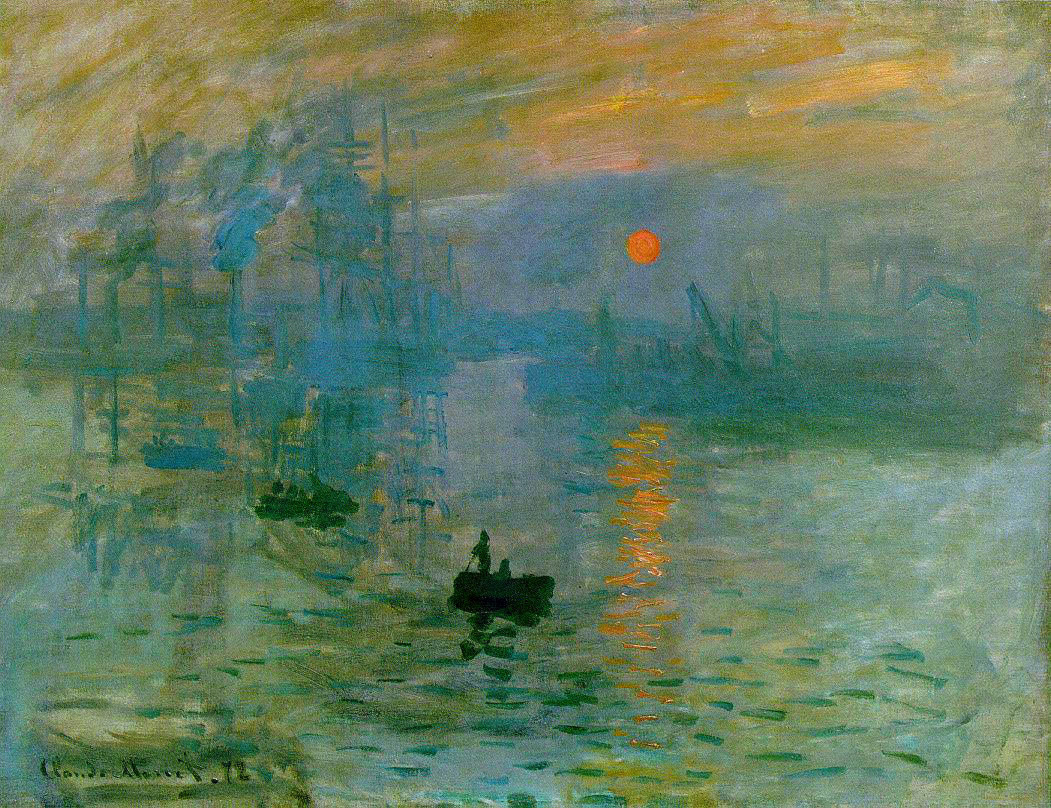
In 1872, Monet painted the dawn over Le Havre, the port town where he was born and raised. A wharf wrapped in mist, the blurred silhouettes of boats, and a single orange sun rising over the gray-blue water. That was all. The boats, the cranes, the smoke from the chimneys — everything was rendered as little more than hazy smudges.
Two years later, in 1874, this painting hung in what would come to be known as the "Impressionist exhibition." When asked to write a title for the catalogue, Monet reportedly felt it would not really pass as a view of Le Havre. He later recalled: "They asked me for a title for the catalogue. It couldn't really be called a view of Le Havre, so I said, 'Just put down Impression.'"
Critic Louis Leroy turned that title into a joke. He quipped that even wallpaper was more finished than this seascape, and added that since it had made an "impression," there must indeed be some "impression" in it. That jeer, ironically, became the name of an entire era.
What matters is that this painting does not explain the harbor. Rather than describing the subject, Monet captured the effects of light, mist, and movement. It was a single, fleeting visual impression of a modern industrial port. That seemingly unfinished quality was, in fact, the very moment he was trying to capture.
It couldn't really be called a view of Le Havre, so I said, just put down Impression.
The same stone, different times
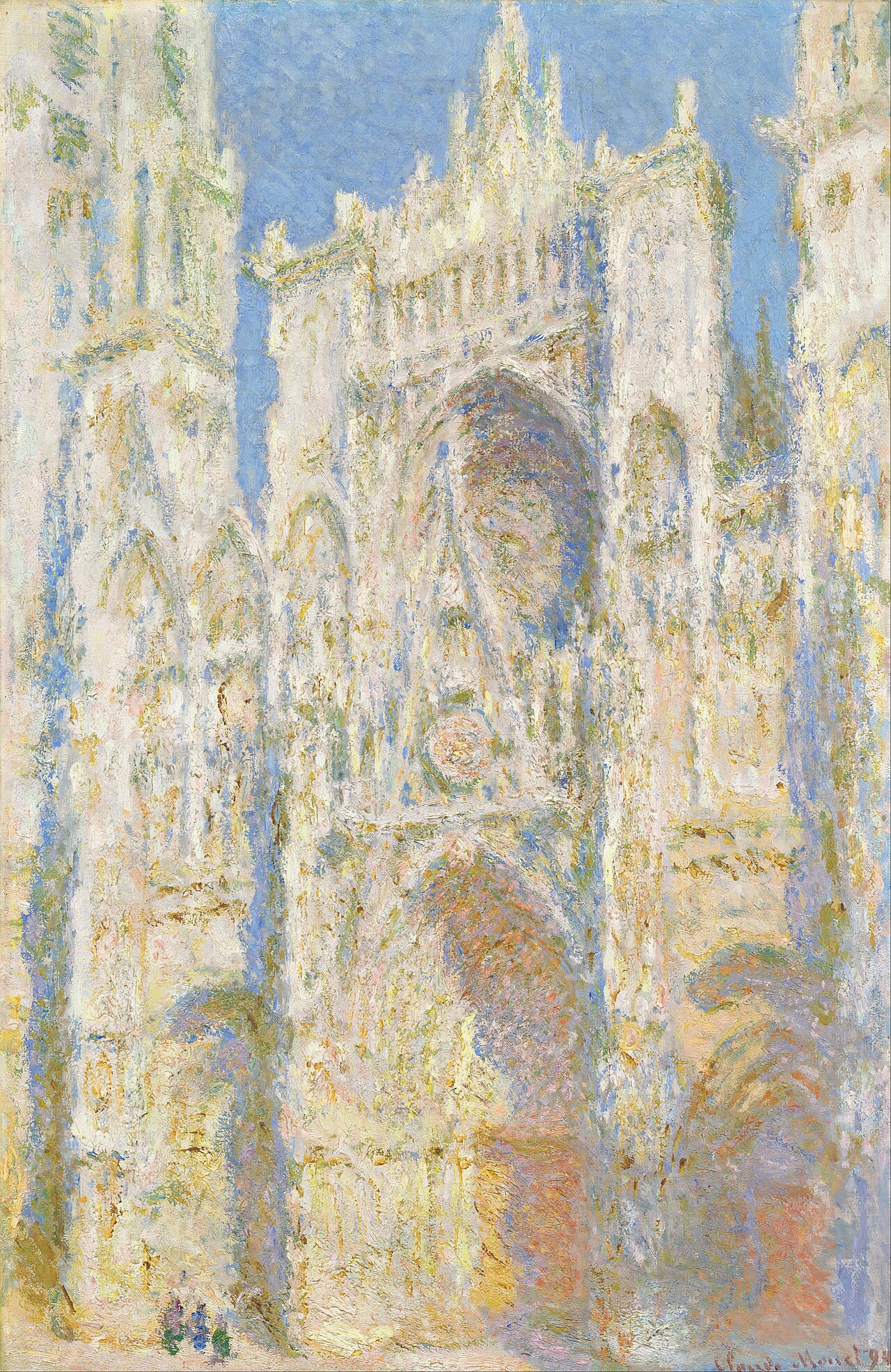
Between 1892 and 1894, Monet painted the façade of Rouen Cathedral more than thirty times. The subject was always the same: the massive Gothic façade, the grain of its stone. But it was never the stone he was pursuing. In the gray mist of morning, under the midday sun, in the red glow of dusk, the same stone wore a different face each time.
He is said to have worked with as many as fourteen canvases set up at once. As the light shifted, he moved between them, carrying his brush from the cathedral of one moment to the cathedral of the next. He took a single subject and sliced time into pieces, setting them all side by side.
Smarthistory's Steven Zucker and Beth Harris put it this way: "There's Monet's interest in his own subjective vision, and his own subjective way of putting paint on canvas. He painted Rouen Cathedral at different times of day, so each moment is unique, each painting is unique, but at the same time they belong to a single series."
So what we see before this series is not the cathedral. It is the process by which the passing of a single day changes the color over a fixed subject. The stone never moved. What moved was the light, and the painter's eye watching it.
Each painting is unique, but at the same time they belong to a single series.
Without horizon, without shore
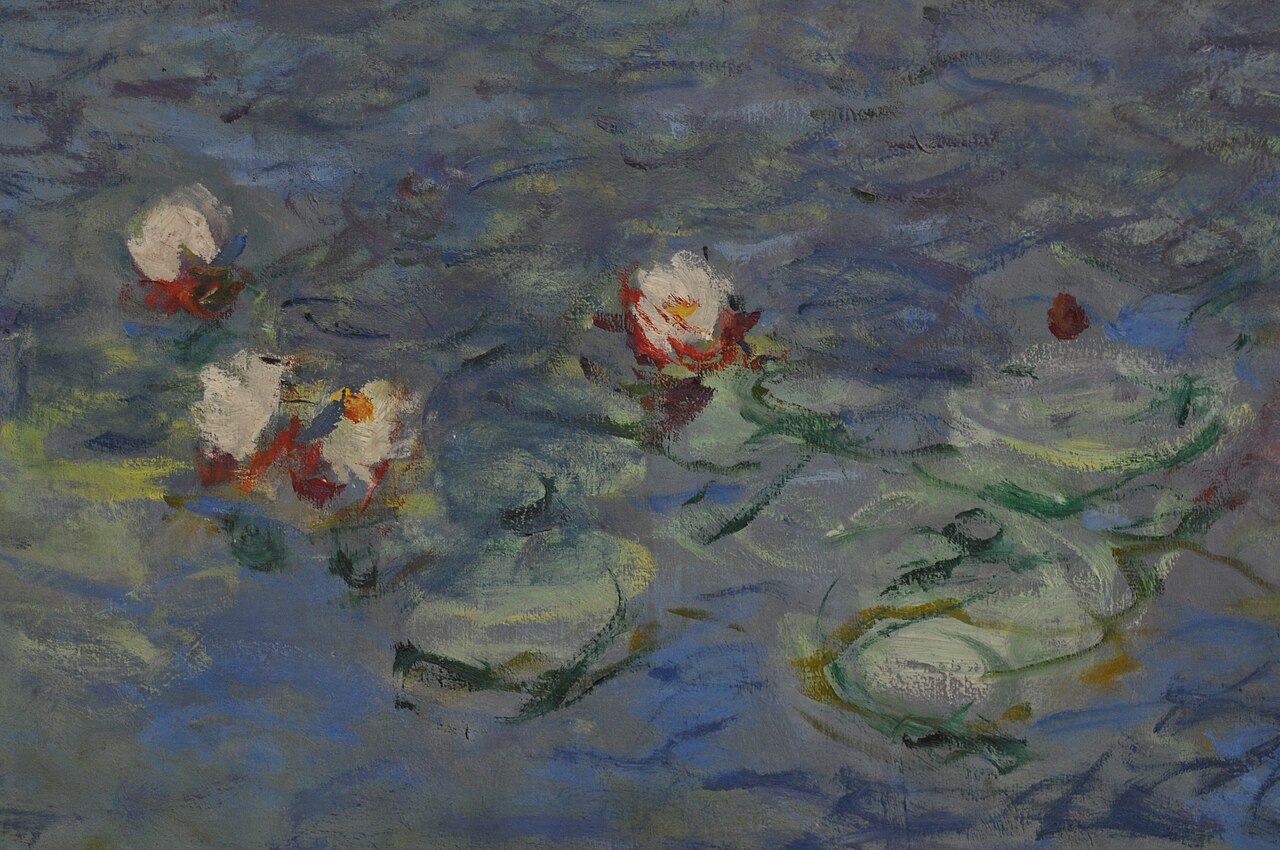
In his final years, Monet gazed at nothing but a single pond in his garden at Giverny. Water lilies, willow branches, trees and clouds reflected on the water. He painted this watery landscape for nearly thirty years, and finally sought to turn it into a single, vast environment.
In November 1918, the day after the armistice was signed, Monet promised to give these paintings to the French nation as a symbol of peace. Two oval rooms, eight panels each two meters tall, a wall of water stretching more than 90 meters in width. The oval shape of the rooms was designed to form the mathematical symbol for infinity.
Monet himself said this work created "the illusion of an endless whole, of a wave without horizon and without shore." The moment visitors step inside, they forget the outside world and are immersed in a space made only of water and light. In 1952, André Masson called this place "the Sistine Chapel of Impressionism."
The Water Lilies were installed at the Orangerie as planned in 1927, a few months after his death. The final place a man who chased light his whole life arrived at was a space where subject and horizon had both disappeared, leaving only a state of light and water. There is nothing left here to paint. There is only time left to be immersed in.
The illusion of an endless whole, of a wave without horizon and without shore.
One Art History Story a Week — on Instagram
See exhibition news and masterwork stories first, in reels and cards.
Instagram · Updated weekly
Curators behind this story
The facts and interpretations in this story are grounded in the public materials of the experts and institutions below. See each original for the full commentary.
- Musée Marmottan Monet (official commentary) · Musée Marmottan Monet (Attribution)
- Impression, Sunrise (encyclopedia fact-check) · Wikipedia (Attribution)
- Dr. Steven Zucker · Dr. Beth Harris · Smarthistory (Attribution)
- Musée de l'Orangerie (official commentary) · Musée de l'Orangerie (Attribution)
- History of the Water Lilies cycle (official commentary) · Musée de l'Orangerie (Attribution)
Business Inquiry
Leave your partnership proposal and we'll review and reply.