The painter of light and silence — Johannes Vermeer
The stillness a man in Delft painted three hundred years ago — we still have not finished reading it
3 chaptersAbout 8 min read
What we know about Vermeer is astonishingly little. The paintings he left behind number around thirty-four today, and the record of his life survives only in scattered handfuls of documents. He was born in the small city of Delft and died there, had many children, and left debts behind. That is nearly all. And yet, strangely, anyone who stands before these few paintings falls silent. The morning light seeping through a window, the thin stream of milk falling into a bowl, the moist lips of a girl looking back over her shoulder at us. Vermeer is a painter without sound. In his rooms, time flows very slowly, almost as if it has stopped. I sometimes think that the reason we linger so long before his paintings is that what he painted was never the object itself, but the light settling upon it, and the silence that light creates.
A face looking back, a girl with no name
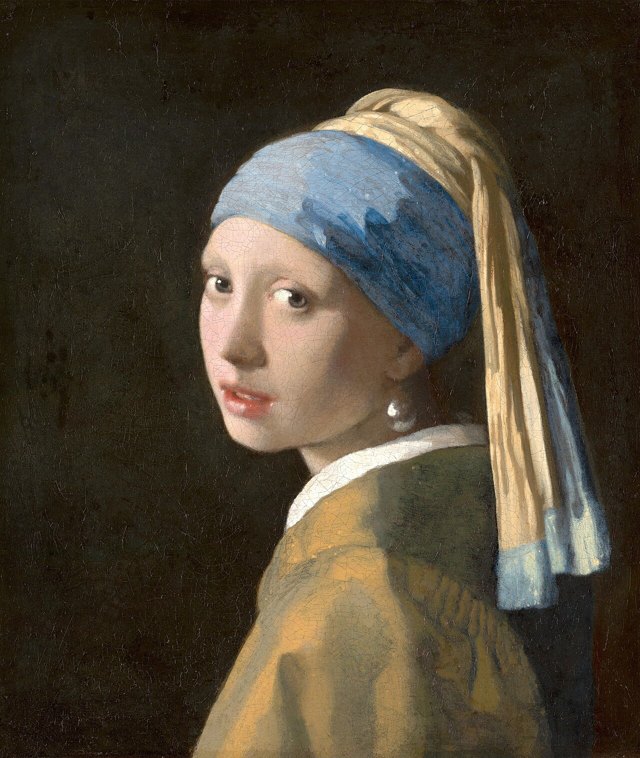
This painting is not a portrait. Art historians Beth Harris and Steven Zucker of Smarthistory describe this work as a "tronie." In 17th-century Netherlands, a tronie meant not a portrait of a specific person, but a "face painting" depicting a type, a character, or an expression. So this girl never had a name to begin with. We do not know who she was, and perhaps Vermeer himself did not know either. Wearing exotic clothing, an Eastern-style turban, and an implausibly large pearl in her ear, this face is less a real person than a vessel made to hold light.
The Mauritshuis dates this painting to around 1665. Oil on canvas, 44.5 by 39 centimeters. It is the museum's most famous holding and one of the most widely known paintings in the world. But fame often obscures a painting. We may have seen this face so many times that we have never truly looked at it at all.
Look closely, and it becomes undeniable that Vermeer is a painter of light: the softness of the girl's face, the tiny gleam of light on her moist lips, and of course the pearl itself. Recent research at the Mauritshuis has revealed something fascinating — that Vermeer changed the composition partway through painting. The position of the ear, the top of the headscarf, the line of the neck were all different from what we see now. He did not know the finished image in advance; he found it as he painted.
One more thing: the deep blue of the headscarf and jacket is no accident. According to the Mauritshuis, it is ultramarine made from lapis lazuli, a semiprecious stone brought from Afghanistan. In the 17th century, this pigment was more precious than gold. Vermeer wrapped the head of a nameless girl in a blue more costly than gold.
And she looks back. As if someone had just called her name, her lips slightly parted. We never hear the voice that called her, nor her answer. Only the silence between them still hangs there, unchanged, after three hundred years.
He wrapped a nameless face in a blue more precious than gold.
Falling milk, a world stopped still
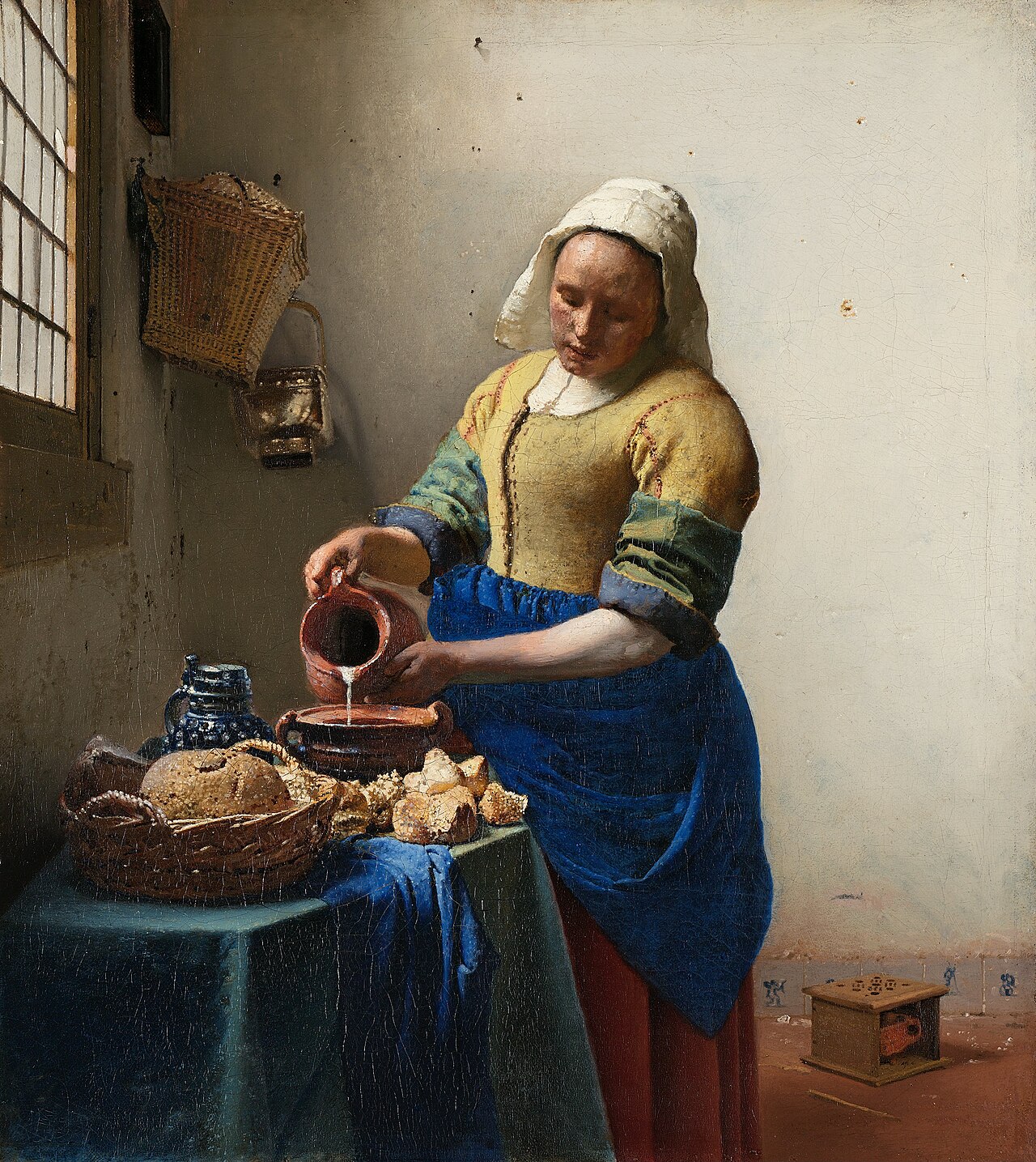
The Rijksmuseum dates this painting to around 1660. The museum's description is simple and precise: a maid pours milk, utterly absorbed in her task. And it adds this: "Apart from the stream of milk, everything else is still."
I have thought about that sentence for a long time. The only thing that moves in the painting is that thin stream of milk falling into the bowl. The woman stands like a statue, in a room filled with bright light. In the museum's own words, she stands "like a statue." Vermeer took an utterly ordinary, everyday gesture and turned it into an overwhelming subject for painting. Bread, milk, and the morning light coming through the window. That is all there is — and precisely because that is all, it feels almost sacred.
The Rijksmuseum also draws attention to the way Vermeer handled light. Using hundreds of small dots of color, he captured how light plays across the surface of objects: the rough texture of the bread crust, the rim of the basket, the nail holes in the wall. Move close, and they scatter into tiny specks of paint; step back, and they gather once more into morning sunlight.
In 2022, the Rijksmuseum used advanced imaging technology to look beneath the surface of this painting, and made a striking discovery. On the wall behind the woman's head, a wooden jug rack with hanging ceramic jugs had originally been painted. In the lower right, there had been a wicker fire basket, once used to warm a baby and dry diapers. Vermeer erased it. Researchers working with the Mauritshuis read the painter's choices in this underlying composition.
The principle that subtracting is, in fact, adding. The Rijksmuseum describes this as "less is more," calling it something of a motto for Vermeer's art — creating a powerful image not through scattered detail but through concentration on the essential. When he erased the jugs from the wall, what was left behind was not emptiness, but a space filled with light and silence.
Apart from the stream of milk, everything else is still.
"The most beautiful painting in the world," he wrote
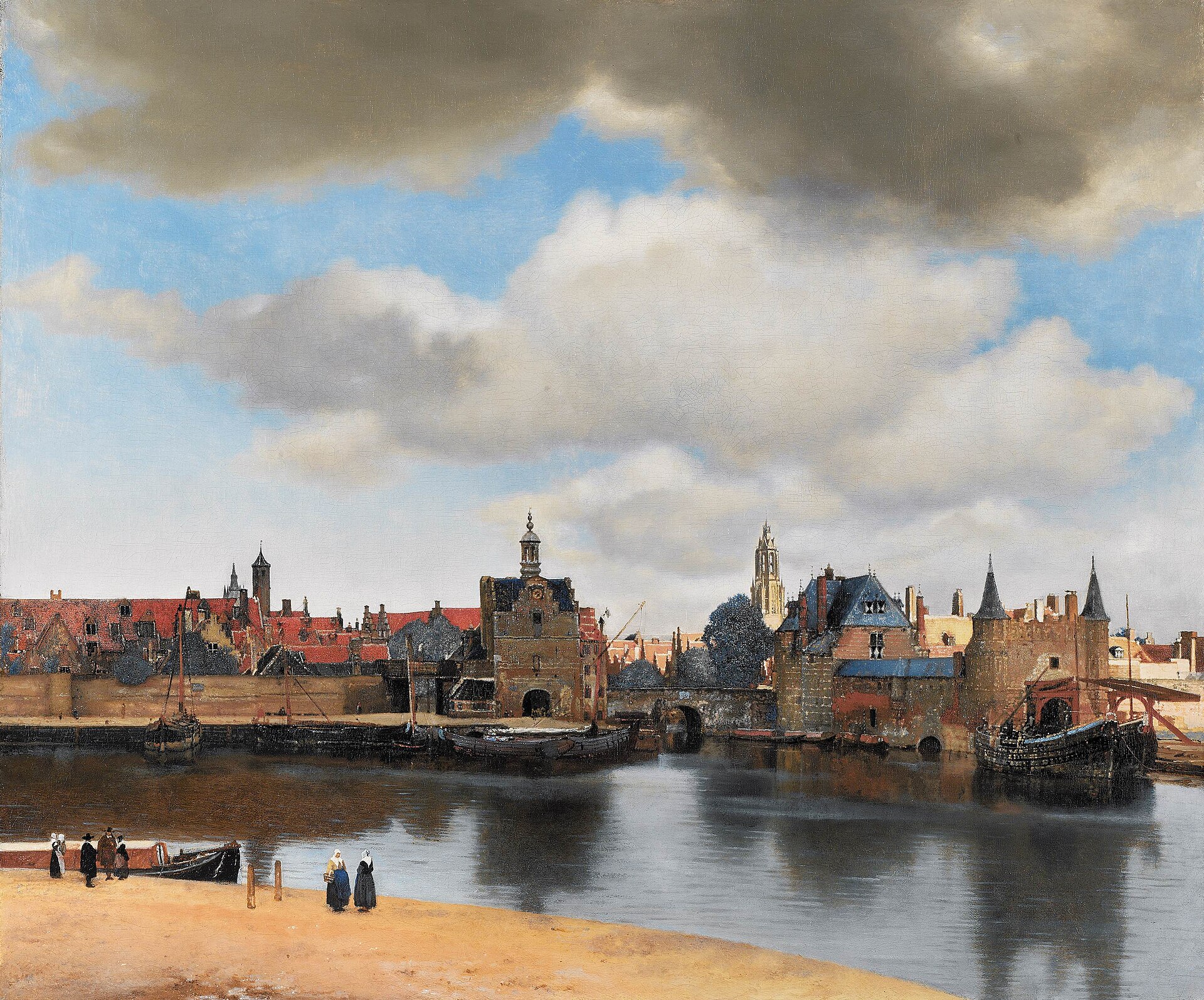
Marcel Proust wrote of this painting: "From the moment I saw the View of Delft in the museum in The Hague, I knew that I had seen the most beautiful painting in the world." The Mauritshuis has quoted this line as the basis for an exhibition, "Vermeer Alone," devoted to this single work.
For Proust, this painting was no mere object of admiration. In the fifth volume of "In Search of Lost Time," the ailing writer Bergotte goes to see this painting and collapses before it, dying of a heart attack. The last thing Bergotte gazes upon is a small patch of yellow on a wall within the painting — the "petit pan de mur jaune." As he dies, he thinks: I should have written like that. I should have made my sentences precious in themselves, like that small patch of yellow wall.
The Mauritshuis has held this painting since the museum opened in 1822. It is a portrait of the city of Delft, yet in truth it is not about the city at all, but about the light of a single moment. Vermeer divided the canvas into three horizontal bands: water, city, and sky. Below, buildings and clouds shimmer in reflection on the river; half the city is still sunk in the shadow of clouds, while the other half has already been touched by sunlight.
One astronomer studied the light and shadow in this painting and even estimated, down to the hour, the exact moment Vermeer captured. But we do not need such calculations to know this: it is that brief moment of stillness just after rain has stopped, or on a morning when something is about to begin, when a city holds its breath.
I do not know whether Proust was right. I am not even sure such a thing as the most beautiful painting in the world exists. But standing before this painting, some morning three hundred years ago in the unfamiliar city of Delft quietly comes back to life, as if it were a place I had once passed through long ago.
I should have made my sentences precious in themselves, like that small patch of yellow wall.
One Art History Story a Week — on Instagram
See exhibition news and masterwork stories first, in reels and cards.
Instagram · Updated weekly
Curators behind this story
The facts and interpretations in this story are grounded in the public materials of the experts and institutions below. See each original for the full commentary.
- Dr. Beth Harris & Dr. Steven Zucker · Smarthistory (Attribution)
- Mauritshuis official commentary and conservation research · Mauritshuis, The Hague (Attribution)
- Rijksmuseum official commentary · Rijksmuseum, Amsterdam (Attribution)
- Underdrawing discovery research (2022, joint study by the Rijksmuseum and Mauritshuis) · Rijksmuseum / CODART (Attribution)
- Mauritshuis official commentary · Alone with Vermeer exhibition · Mauritshuis, The Hague (Attribution)
- Marcel Proust, quoted via Mauritshuis commentary · Mauritshuis, The Hague (Attribution)
Business Inquiry
Leave your partnership proposal and we'll review and reply.