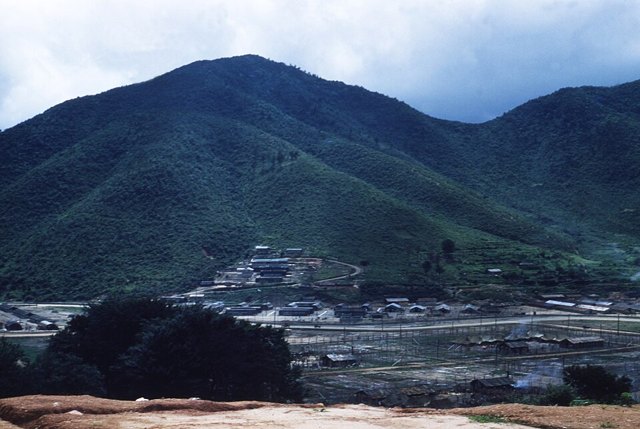
Geoje POW Camp
Source: Wikidata · Last verified 2026-07-17
A prisoner-of-war camp.
About
The Geoje POW Camp was a facility that held North Korean People's Army and Chinese People's Volunteer Army prisoners captured during the Korean War. It was established in February 1951 in what is now the Gohyeon-dong and Suyang-dong area of Geoje-si, and operated until July 1953. The location was chosen for being close to land, which was advantageous for transporting prisoners, and, given the limited transportation of the time, suitable for isolated detention. On December 20, 1983, it was designated Gyeongsangnam-do Cultural Heritage Material No. 99, and it continues to be managed as a cultural heritage site today. The Geoje POW Camp was established from November 1950 across an area of roughly 3.6 million pyeong spanning the Gohyeon, Sangdong, Yongsan, Yangjeong, Suwol, Haemyeong, and Jeosan districts, and is known to have held as many as 173,000 prisoners at its peak. Of these, 150,000 were North Korean People's Army soldiers, 20,000 were Chinese communist troops, and 3,000 were female prisoners and volunteer soldiers. The camp was divided into numbered zones such as 60, 70, 80, and 90, each containing detention blocks capable of holding about 6,000 people, with the whole camp comprising four zones and 28 detention blocks. The camp was equipped with facilities to support its own operation, including an airfield, a port, supply depots, a hospital, roads, and searchlight installations; Zone 6 was located in the central valley, and Zones 7, 8, and 9 in the eastern valley. Bloody clashes between anti-communist and pro-communist prisoners frequently occurred here, and on May 7, 1952, the camp commander, Brigadier General Dodd, was even taken hostage. The Geoje POW Camp serves as a site of national historical education showing the horrors of the Korean War; today, some of the camp's remaining buildings still stand here and there, bearing witness to the conditions of that time. Visitors can come to understand the history of the Korean War and the lives of prisoners during that period, and, at this site designated as a cultural heritage facility, gain an opportunity to look back on the past.
Republic of Korea, Geoje-si, Gohyeon-dong, Gyeryong-ro 61
Business Inquiry
Leave your partnership proposal and we'll review and reply.