The Kiss
The Kiss (Der Kuss)
Collection Belvedere Museum · ViennaMuseum info & exhibitions →
Why does the love depicted in this painting still feel so intense after 100 years?
Key Points
- The mysterious symbols hidden within this painting of love
- The magic of light created by Klimt's golden technique
- Why do the man and woman in this painting lean so close together?
- 1908: Klimt's painting of a mysterious moment of love
Reading the Work
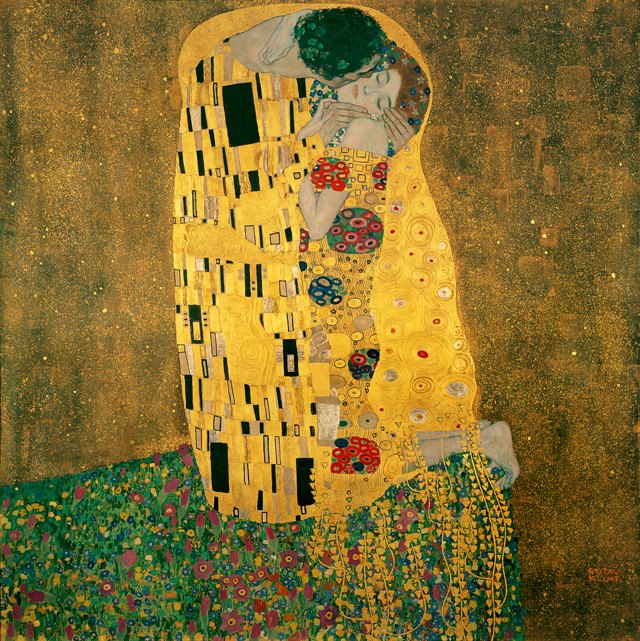
Klimt depicted a man and a woman gazing into each other's faces as they kiss. They are clothed, but their bodies are almost entirely wrapped around one another. The man's arm wraps around the woman's shoulder, while the woman's arm wraps around the man's neck. Their bodies lean toward each other. Their eyes gaze into one another's, and their lips are close enough to nearly touch.
Klimt used a great deal of gold in this painting. His painting gives the impression that light itself is glimmering. Intricate patterns fill the painting. Various patterns are drawn on the man's clothing and the woman's clothing. There is an effect of shimmering light around their bodies. The painting contains many hidden symbols.
With this painting, Klimt expressed love, sexuality, and mystery. His painting conveyed emotion through light, color, and pattern. This painting clearly demonstrates Klimt's style. It holds an important place in art history.
One Art History Story a Week — on Instagram
See exhibition news and masterwork stories first, in reels and cards.
Instagram · Updated weekly
Further reading · Smarthistory · CC BY-NC-SA 4.0
Image: Public domain · Wikimedia Commons
Last updated 2026-07-17
Business Inquiry
Leave your partnership proposal and we'll review and reply.