The Night Watch
The Night Watch (De Nachtwacht)
Collection Rijksmuseum · Amsterdam
1642: the figures in this painting come to life
Key Points
- A painting bringing together 18 members of a civic militia in a single scene
- Rembrandt brought the scene to life through light and shadow
- The painting is titled "The Night Patrol," but the scene actually takes place in daylight
- The painting was originally not called "The Night Watch" but "The Night Patrol"
Reading the Work
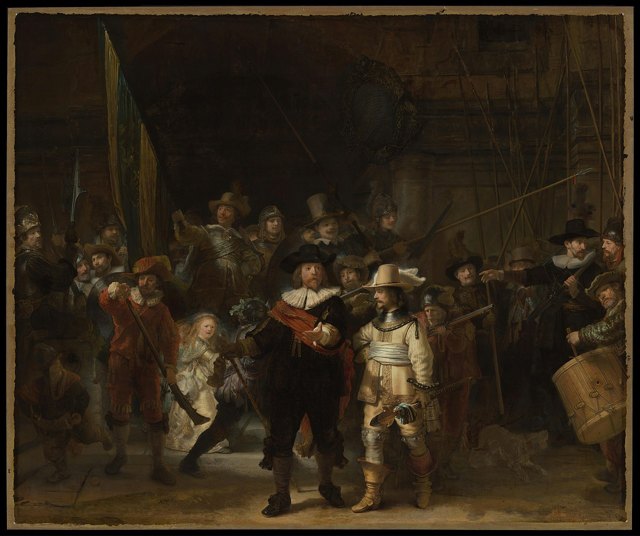
In 1642, Rembrandt painted an Amsterdam civic militia company. Captain Frans Banning Cocq and Lieutenant Willem van Ruytenburch stand at the center, with the militia members lined up behind them. The figures in the painting are all real people, their faces and expressions vividly captured.
Rembrandt used light and shadow to draw the viewer's eye toward the center. It is because of his technique that the captain, the lieutenant, and the girl behind them draw the most attention. In the background of the painting is the ensign, Jan, holding the militia's flag. The girl in the painting has a dead chicken hanging at her waist, symbolizing the tradition of the militia.
This painting shows the Dutch Golden Age at its peak. Rather than a simple group portrait, Rembrandt created a vivid, living scene. His technique inspired many painters afterward, and his style remains alive in painting to this day.
One Art History Story a Week — on Instagram
See exhibition news and masterwork stories first, in reels and cards.
Instagram · Updated weekly
Further reading · Smarthistory · CC BY-NC-SA 4.0
Image: Public domain · Wikimedia Commons
Last updated 2026-07-17
Business Inquiry
Leave your partnership proposal and we'll review and reply.