The Birth of Venus
The Birth of Venus (Nascita di Venere)
Collection Uffizi Gallery · FlorenceMuseum info & exhibitions →
A goddess born from the sea — what secret lies hidden in this painting?
Key Points
- Venus, the goddess of love and beauty born from the sea, appears in this painting.
- The figures in the painting riding the wind toward the shore are all mythological figures.
- Botticelli completed this painting in a distinctive style that went beyond classical beauty.
- The woman depicted in the painting was inspired by a real person.
Reading the Work
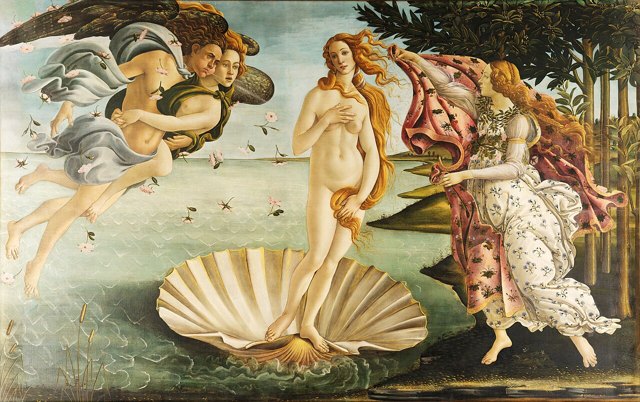
This painting depicts the scene of Venus, goddess of love and beauty, being born from the sea and moving toward the shore. Venus stands on a shell that emerged from the sea, carried toward the shore by the wind. The figures following her are mythological: Zephyrus, who blows the wind, and Hora, the goddess of the seasons.
The painting's colors are filled with soft, beautiful tones. Venus's body is depicted as long and supple, and her hair streams in the wind. Zephyrus, with wings attached, blows the wind and guides Venus, while Hora offers Venus a cloak covered in flowers. The details of the painting are rendered with great refinement.
This painting was created in a distinctive style that went beyond the classical beauty of the Renaissance. Venus's body is not realistic, but its beauty is visually striking. The painting is widely known as a symbol of love and beauty and is regarded as one of the masterpieces of Renaissance art.
One Art History Story a Week — on Instagram
See exhibition news and masterwork stories first, in reels and cards.
Instagram · Updated weekly
Further reading · Smarthistory · CC BY-NC-SA 4.0
Image: Public domain · Wikimedia Commons
Last updated 2026-07-17
Business Inquiry
Leave your partnership proposal and we'll review and reply.