Liberty Leading the People
Liberty Leading the People (La Liberté guidant le peuple)
Collection Louvre Museum · ParisMuseum info & exhibitions →
The goddess leading liberty — what does she hold in her hand?
Key Points
- A goddess symbolizing liberty leads the people, carrying a bayonet and the flag
- The Phrygian cap and bared breast serve as a symbol of liberty and a visual shock
- The figures in the painting represent various social classes, showing their resolve
- A work commemorating the July Revolution, yet it also symbolizes the revolution's end
Reading the Work
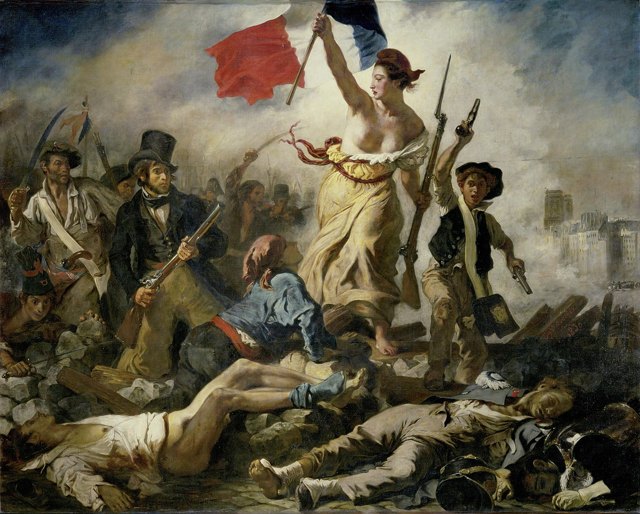
In this painting, a goddess symbolizing liberty carries a bayonet and the flag, leading the people forward over corpses and rubble. She wears a Phrygian cap and bares her breast, which is also a symbol of the 1789 revolution. Those following her represent various social classes — the bourgeoisie, students, and revolutionaries.
Delacroix depicted Liberty as an allegorical goddess whose body seems to move beyond the canvas toward the viewer. The tricolor flag and the tricolor at Notre-Dame Cathedral add vitality to the scene. The brushwork is free and loose, while the corpses and rubble serve to balance the composition.
This painting symbolizes the end of Romanticism and became a symbol of liberty and revolution. The gazes and postures of the figures convey the passion of revolution directly. This work is one of the most famous paintings in French art history and remains on display at the Louvre Museum to this day.
One Art History Story a Week — on Instagram
See exhibition news and masterwork stories first, in reels and cards.
Instagram · Updated weekly
Further reading · Smarthistory · CC BY-NC-SA 4.0
Image: Public domain · Wikimedia Commons
Last updated 2026-07-17
Business Inquiry
Leave your partnership proposal and we'll review and reply.