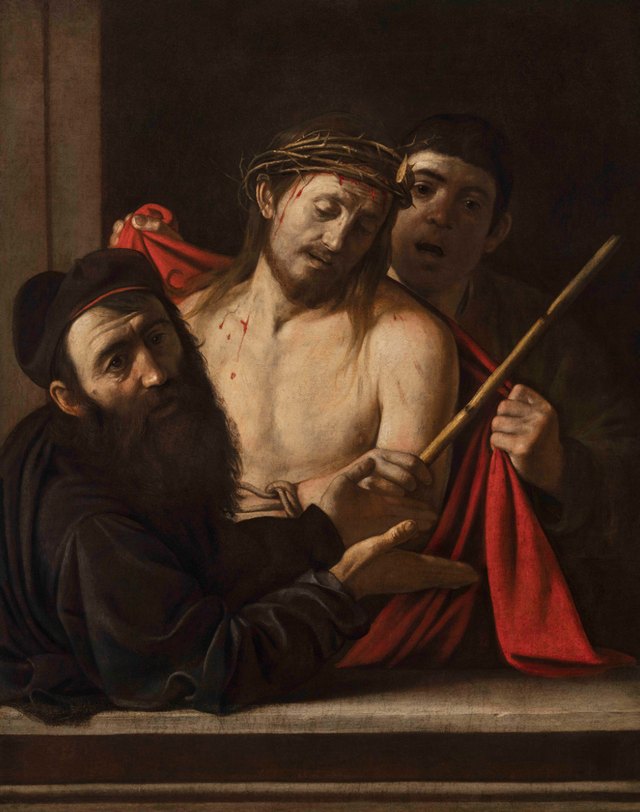
Ecce Homo
Collection Exhibited at the Prado Museum (privately owned, export prohibited) · Madrid
Why did this painting disappear for 400 years?
Key Points
- Pilate, presenting Jesus before the crowd, cried out, "Behold the Man"
- In the painting, Jesus has been whipped and wears a crown of thorns
- This painting depicts one of the most common subjects in Christian art
- This painting portrays the suffering of Jesus, distinguished by a gaze that looks directly at the viewer
- This painting is widely known in art history as "Christ in Suffering"
Reading the Work
This painting depicts Jesus, led out by Pilate's hand, having been whipped and wearing a crown of thorns. His face is filled with pain and sorrow, and his body is marked with wounds. Jesus is led out by Pilate's hand, presented before the crowd.
In this painting, Caravaggio used strong contrast to emphasize the face and body of Jesus. His eyes look directly at the viewer, creating the sense of being present within the scene. Jesus's body is marked with wounds, with the marks of the crown of thorns and the whip clearly visible. The background is rendered in dark tones, further emphasizing Jesus's suffering.
This painting depicts the suffering of Jesus with striking realism, distinguished by a gaze that looks directly at the viewer. Through this painting, Caravaggio emphasizes Jesus's suffering, deepening the viewer's sense of faith. It is one of the most common subjects in Christian art and had a great influence on later artists.
One Art History Story a Week — on Instagram
See exhibition news and masterwork stories first, in reels and cards.
Instagram · Updated weekly
Further reading · Museo del Prado · Public domain
Image: Public domain · Wikimedia Commons
Last updated 2026-07-17
Business Inquiry
Leave your partnership proposal and we'll review and reply.