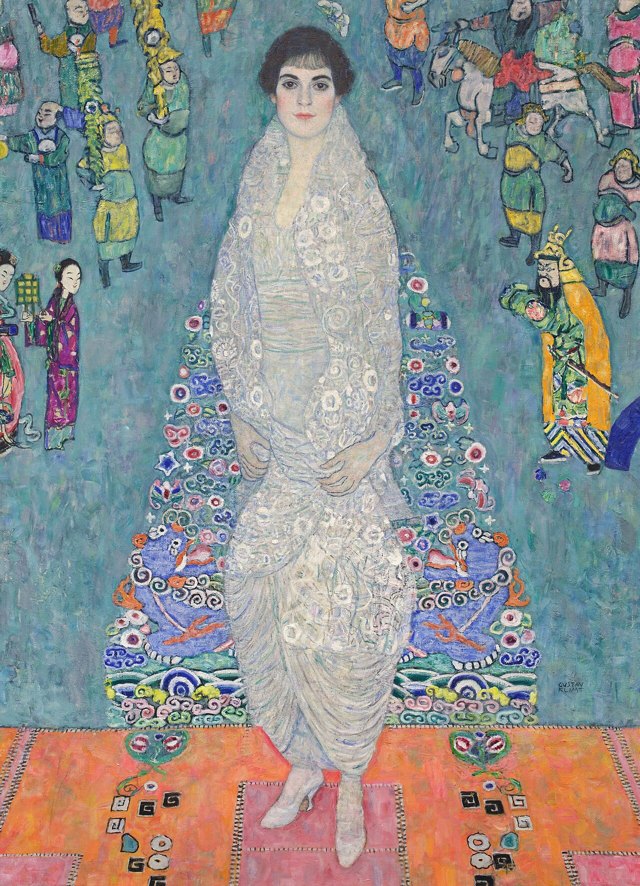
Portrait of Elisabeth Lederer
Bildnis Elisabeth Lederer
Collection Private collection (sold at Sotheby's, 2025) · New York
The secret behind Klimt's "most expensive painting"
Key Points
- Painted by Klimt between 1914 and 1916, it is the most expensive modern artwork
- The story hidden in the fashion and symbolism worn by a model from a Jewish family
- Elements of Chinese and Japanese art within the painting drew attention in art history
- The fate of a model who survived war, displacement, and Nazi persecution
- A painting Klimt never finished, later a stunning success at auction
Reading the Work
Between 1914 and 1916, Klimt painted the 20-year-old Elisabeth Lederer. She was the daughter of the Lederer family, wealthy Viennese Jews, and this was the second portrait Klimt painted of the family after his portrait of her mother, Serena Lederer. She wears a white skirt and blouse, draped with a rich, floral-patterned shawl. Her clothing reflects the style of Parisian fashion designer Paul Poiret.
In the painting, Elisabeth wears a white skirt and blouse, draped with a rich, floral-patterned shawl. Her clothing reflects the style of Parisian fashion designer Paul Poiret. The background blends elements of Chinese and Japanese art. Klimt also incorporated Chinese cultural motifs and figures from Peking Opera into the painting. The painting's colors clearly display Klimt's late style.
This painting is a masterpiece that clearly demonstrates Klimt's late style. It skillfully blends elements of Chinese and Japanese art. The fashion and background of the figure reflect the fashion and artistic trends of Europe at the time. This is one of the paintings Klimt left unfinished, and it later achieved a stunning success at auction.
One Art History Story a Week — on Instagram
See exhibition news and masterwork stories first, in reels and cards.
Instagram · Updated weekly
Further reading · Sotheby's · Public domain
Image: Public domain · Wikimedia Commons
Last updated 2026-07-17
Business Inquiry
Leave your partnership proposal and we'll review and reply.